
Top 5 Packaging Trends for Food Grains in 2026
1. The Shift to Mono-Material Recyclability
The “War on Plastic” has shifted from bans to “Design for Recycling.” Historically, food bags used different plastics for different layers (e.g., PET for print and PE for sealing), which are nearly impossible to recycle. By 2026, we expect a massive shift toward Mono-Material Polyethylene (PE) or Polypropylene (PP) pouches. These “all-in-one” materials provide excellent barriers but can be tossed into a single recycling bin, helping brands meet their sustainability targets in markets like Singapore and the EU.
2. Smart Packaging and QR-Code Traceability
Transparency is the new “Organic.” Consumers in 2026 want to know exactly where their rice came from. Integrating QR codes into the bag design allows shoppers to scan and see:
- The specific farm or cooperative in the Mekong Delta or Isan province.
- The harvest date and milling date.
- Third-party lab results for pesticide-free or non-GMO status.
This level of “farm-to-fork” traceability is becoming a requirement for high-end exports and builds immense brand loyalty.
3. Minimalist and “Clean Label” Aesthetics
The trend is moving away from the cluttered, neon-colored designs of the past. In 2026, “Less is More.”
- Matte Finishes: Give a natural, earthy feel.
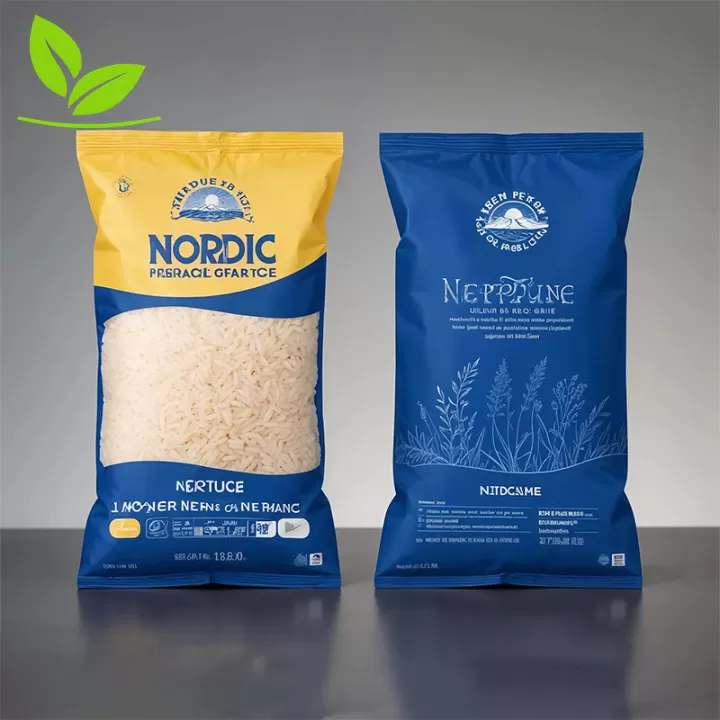
- Transparent Windows: Showcasing the product rather than a photo of the product.
- Typography-Focused Design: Using clean, modern fonts to highlight health benefits (e.g., “High Fiber,” “Low GI”).
This minimalist approach resonates with the growing health-conscious middle class in urban centers like Jakarta, Ho Chi Minh City, and Bangkok.
4. Functional Convenience: Handles and Re-sealability
As households get smaller, the “convenience factor” is a major differentiator. We are seeing a move away from the “cut-to-open” 5kg bags. By 2026, even commodity-level rice bags will feature:
- Slide Zippers: To keep the rice fresh in the pantry without needing a separate container.
- Ergonomic Side-Gusset Handles: Making it easier for elderly or smaller-statured consumers to carry the product.
5. Bio-Based Additives for Traditional Plastics
While fully compostable bags are still expensive for the grain industry, “Bio-based” additives are the middle ground for 2026. These additives are made from renewable resources like sugarcane or corn and can be mixed with traditional PP/PE to reduce the carbon footprint of the packaging without compromising the strength required for 25kg loads.
 How High-Barrier Vacuum Packaging Extends Rice Freshness for The Ultimate Guide to 25kg/50kg Export Grade PP Woven Sacks
  Why BOPP Laminated Bags are the Choice for Premium Rice Bran
  Understanding Food-Grade Packaging Certifications (FDA, SGS)


- Zhaowang and Dongguang, Tianhe Distric
